
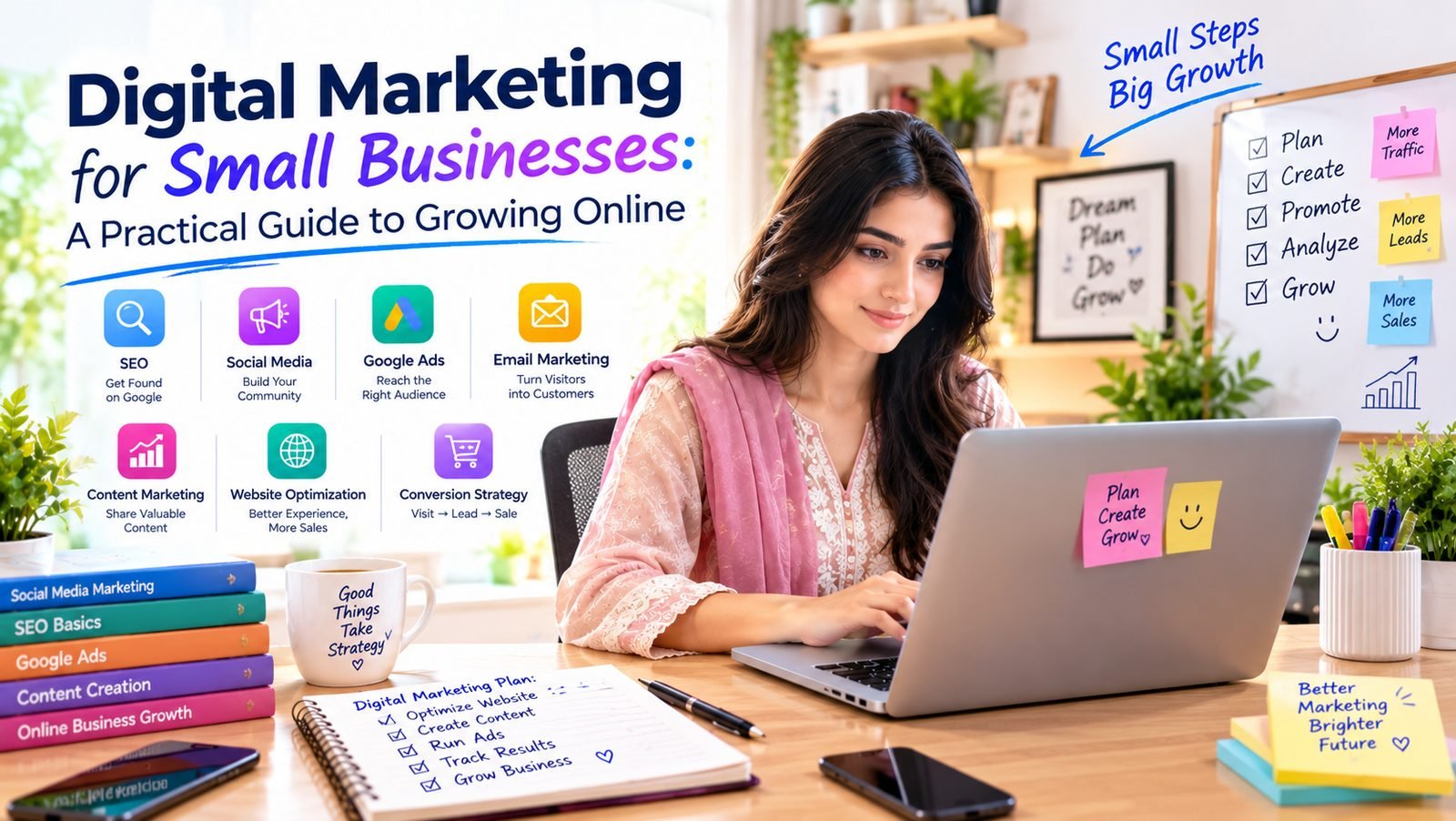
Digital Marketing for Small Businesses: A Practical Guide to Growing Online
Running a small business is exciting, but getting consistent customers can be challenging. Today, people search online before choosing a product, service, or business. That is why having a strong digital presence is no longer optional—it is an important part of business growth.
The good news is that small businesses do not need a huge marketing budget to start. With the right digital marketing strategy, you can build visibility, attract the right audience, and turn online visitors into customers.
What Is Digital Marketing?
Digital marketing means promoting your business through online channels such as search engines, social media, websites, email, online advertising, and useful content.
Instead of depending only on traditional advertising, businesses can use digital platforms to reach people who are already interested in their products or services.
For a small business, digital marketing can help you:
- Reach more potential customers
- Build brand awareness
- Generate enquiries and leads
- Increase website traffic
- Build trust and credibility
- Sell products or services online
- Measure marketing results
Why Digital Marketing Is Important for Small Businesses
Large companies often have big advertising budgets, but small businesses can compete by being more focused and useful.
A well-optimized website, active social media presence, useful content, and local search visibility can help a small business reach customers without spending a huge amount of money.
The key is not to be everywhere. The key is to choose the platforms where your customers are most likely to be.
1. Build a Professional Website
Your website is your digital home.
A professional website should clearly explain:
- Who you are
- What you offer
- Who you help
- Why customers should choose you
- How customers can contact you
Your main pages should normally include Home, About, Services, Contact, and Blog.
Make sure your website works properly on mobile phones because many customers browse and search from mobile devices.
2. Start Creating Useful Content
Content marketing is one of the best ways to build long-term online visibility.
Instead of only saying “buy our product” or “contact us”, create content that answers the questions your customers are already asking.
For example, a digital marketing agency can publish articles about SEO, Google Ads, website development, social media marketing, and AI automation.
Useful content can help your business demonstrate expertise and build trust before a customer makes a purchase.
3. Focus on SEO
Search Engine Optimization, commonly called SEO, helps search engines understand your website and its content.
For beginners, start with the basics:
- Use clear page titles
- Create useful headings
- Write helpful original content
- Use relevant keywords naturally
- Optimize images
- Improve website speed
- Make your website mobile-friendly
- Add internal links between related pages
Do not write content only for search engines. Write for real people first.
4. Use Social Media Strategically
You do not need to manage every social media platform.
Choose the platforms where your target customers spend their time.
For example, a local business may benefit from Facebook and Instagram, while a B2B company may focus more on LinkedIn.
Your social media content can include:
- Educational tips
- Customer stories
- Product demonstrations
- Behind-the-scenes content
- Short videos
- Frequently asked questions
- Special offers
Consistency is more important than posting dozens of times without a strategy.
5. Build Local Visibility
If your business serves a specific city or area, local digital marketing can be extremely valuable.
Keep your business information accurate across important online platforms.
Make sure your business name, phone number, website, address or service area, and business category are consistent.
Encourage genuine customers to leave honest reviews and respond professionally to customer questions.
6. Use Paid Advertising Carefully
Paid advertising can help you reach potential customers faster.
Platforms such as Google Ads and social media advertising allow businesses to target specific audiences.
However, do not start by spending a large amount of money.
Start with a clear goal, such as:
- Website visits
- WhatsApp enquiries
- Phone calls
- Lead generation
- Product sales
Track the results and improve your campaigns based on actual data.
Artificial intelligence can help small businesses save time.
7. Use AI and Automation
AI tools can assist with tasks such as:
- Content ideas
- Research
- Customer-support drafts
- Marketing planning
- Data analysis
- Workflow automation
- Repetitive administrative tasks
AI should support your business rather than replace human judgment.
The best results usually come from combining automation with human creativity, experience, and customer understanding.
8. Measure Your Results
One of the biggest advantages of digital marketing is that you can measure performance.
Track important metrics such as:
- Website visitors
- Leads
- Enquiries
- Conversion rate
- Advertising cost
- Sales
- Social media engagement
Do not focus only on likes and followers. The most important question is whether your marketing is helping your business achieve its actual goals.
A Simple Digital Marketing Plan for Beginners
If you are starting from zero, do not try to do everything at once.
Start with these steps:
- Create or improve your website.
- Clearly define your target customer.
- Set up your important social media profiles.
- Create useful content every week.
- Start basic SEO.
- Build local visibility if you serve a local market.
- Test paid advertising with a controlled budget.
- Measure results and improve your strategy.
Small improvements made consistently can create significant results over time.
Final Thoughts
Digital marketing gives small businesses the opportunity to compete, build trust, and reach customers beyond their immediate location.
You do not need to master every marketing channel on the first day. Start with the fundamentals, understand your audience, create useful content, and measure what works.
At Gul Business Development, our goal is to make digital growth practical and easier to understand for businesses and learners.
Explore our practical resources, learn new digital skills, and build your online presence step by step.